

People in the Hills District tend to learn this the hard way. One week it is bright, dry heat that hangs around until late. Then it flips to sticky, stormy humidity. Winter is not brutal, but it is long enough for cold nights and frosty mornings to feel annoying, especially in homes with lots of glass or high ceilings.
So when locals ask what the best air conditioning Hills District solution is for the local climate, they are usually not asking about brand names. They want the setup that actually fits the way the area behaves. Heat spikes. Humidity swings. Big family homes. Home offices. Busy weekends. Real life.
This guide is written for Sydney property owners who want a practical shortlist, plus a few things to check before they book an installer or service tech.
What makes the Hills District climate tricky for air conditioning?
The Hills sits inland enough to get hotter summer days than the coast, and it also copes with humidity when storms roll through. That means an air conditioning system for the Hills District climate has to do two jobs well.
First, it needs to handle sharp peaks in temperature without running flat out all day. Second, it must pull moisture out of the air so the house feels comfortable, not just “technically cool”.
A lot of people miss that second bit. A system can hit the target temperature and still feel gross inside. That is usually dehumidification, sizing, or airflow.
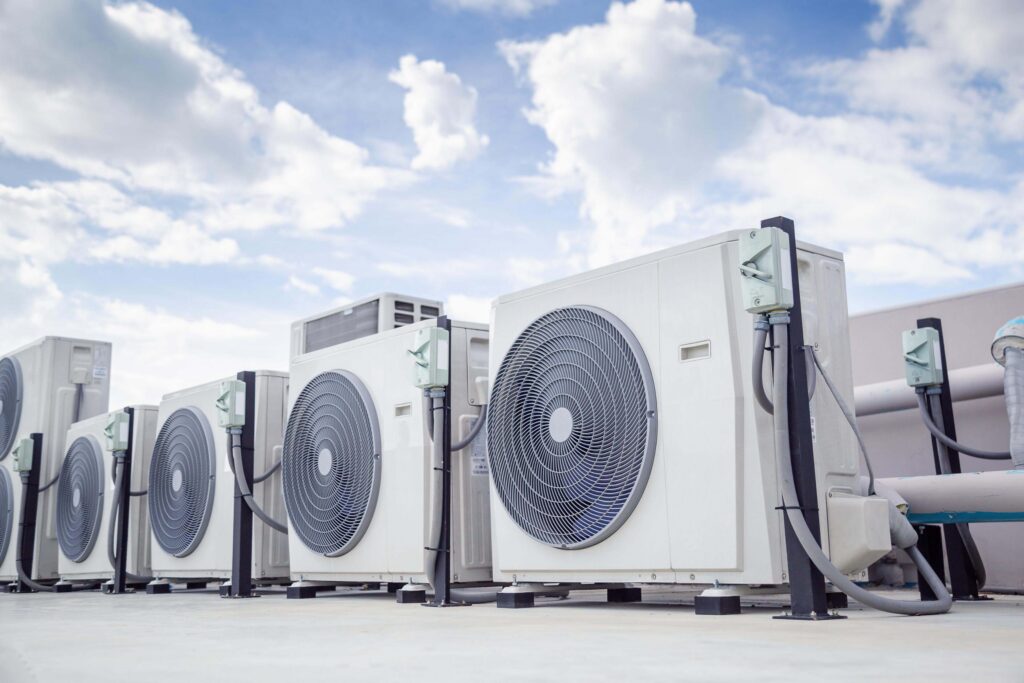
Which air conditioning system suits most Hills District family homes?
For many detached houses in the area, the most common “best fit” ends up being either a ducted reverse cycle system or a multi split setup. In other words, the right air conditioning system for the Hills District climate is usually the one that can cool multiple rooms properly and still behave efficiently on mild days.
Ducted systems suit:
- Larger homes with 4 plus bedrooms
- People who want clean ceilings and no wall units
- Families who want one system with zoning control
Multi splits suit:
- Homes where only certain rooms need cooling most days
- Renovations where ducting is difficult
- Households that want staged spend, adding rooms later
Neither is automatically better. The layout decides a lot.
Is ducted air conditioning the best air conditioning system for the Hills District climate?
Often, yes. Especially in modern Hills homes that have open plan living downstairs and bedrooms upstairs. Ducted reverse cycle with proper zoning is a strong match because it can handle whole house cooling in heatwaves and still run smaller zones in spring and autumn without wasting power.
But only if the design is right.
A ducted air conditioning system for the Hills District climate should include:
- Real zoning (not just one big zone pretending to be zoned)
- Return air positioned sensibly, not in a dead corner
- Enough outlets for the room sizes and ceiling heights
- A controller strategy that makes sense for how the family uses the house
A rushed ducted install can be expensive and still underperform. That is why homeowners should treat “design and commissioning” as part of the purchase, not a bonus.
When is a split system a smarter choice than ducted?
Split systems are still a great option in the Hills. They are efficient, quick to install, and brilliant for targeted comfort. A split system air conditioning system for the Hills District climate works well when the household mainly needs cooling in a couple of key areas, like the living room and master bedroom.
They also make sense when:
- The home has a smaller floor area
- There is a granny flat, studio, or converted garage
- The house has distinct hot spots that need their own control
- The owners want lower upfront costs than ducted
The main limitation is coverage. One split in the living room will not magically cool upstairs bedrooms, not in a typical Hills two-storey layout.
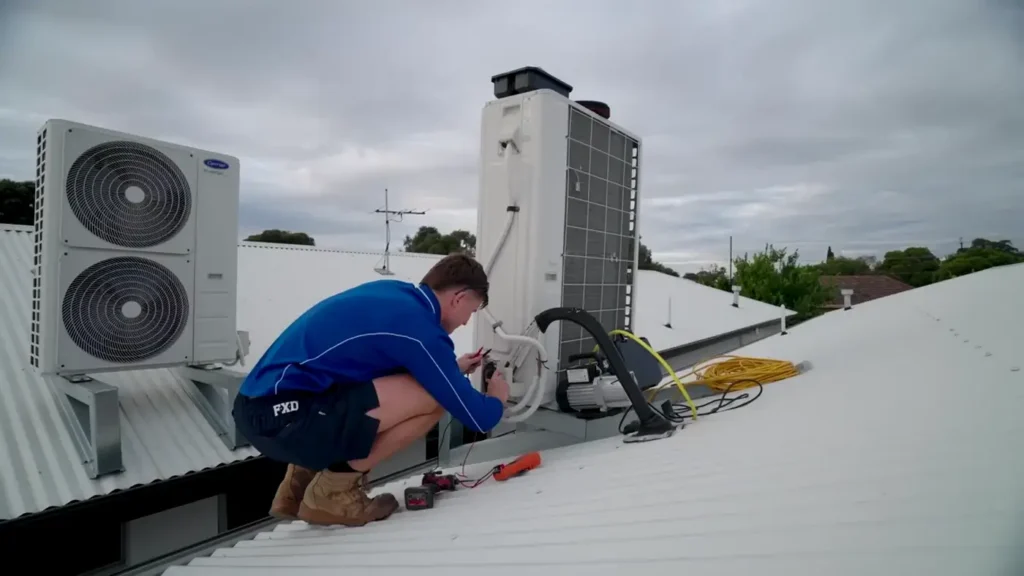
Should Hills District homes consider multi split systems?
Yes, and they are often overlooked. A multi split setup runs multiple indoor units from one outdoor unit. This can be a neat compromise when ducted is not practical, but single splits are too limited.
A multi split air conditioning system for the Hills District climate can work well for:
- Homes with 3 to 5 rooms needing regular use
- Properties where outdoor space is tight
- Households that want individual room control
Still, there is a trade-off. If the one outdoor unit has issues, all connected rooms are affected. And it is important not to overload the outdoor unit by adding too many indoor heads just because “it fits on paper”.
What about evaporative cooling in the Hills District climate?
Evaporative cooling can feel amazing in hot, dry conditions. The problem is the Hills is not reliably dry. Storm humidity can roll in fast, and evaporative systems struggle then.
So for most households, evaporative is not the best air conditioning system for the Hills District climate if they want consistent comfort across the full summer. Some properties still use it successfully, but usually with realistic expectations and good cross ventilation.
Reverse cycle systems tend to win because they cool and dehumidify.
How important is sizing for comfort and running costs?
Sizing is massive. Oversized systems short cycle. Undersized systems run non stop. Both can feel uncomfortable, especially during humid stretches when the system needs time to pull moisture out.
A properly sized air conditioning system for the Hills District climate should be selected using an actual load calculation. Not guesses. Not “same as the neighbour’s”. Factors that change sizing in Hills homes include:
- Ceiling height and voids
- West facing glass
- Insulation quality
- Floor plan openness
- Number of occupants and heat generating appliances
It is worth repeating. Bigger is not always better. Bigger can be worse.
What features matter most for the Hills District climate?
Plenty of features sound nice in brochures. Only a few consistently help in the Hills.
For an air conditioning system for the Hills District climate, the most useful features are:
- Inverter technology (smooth, efficient operation)
- Good dehumidification or a “dry” mode that actually works
- Zoning (for ducted)
- WiFi control for households managing work, school, and irregular schedules
- A quiet outdoor unit, especially in denser suburbs or tight setbacks
- A decent filter setup if the household is sensitive to dust and pollen
It is also smart to check the warranty terms and what voids them. Some brands are strict about service intervals.
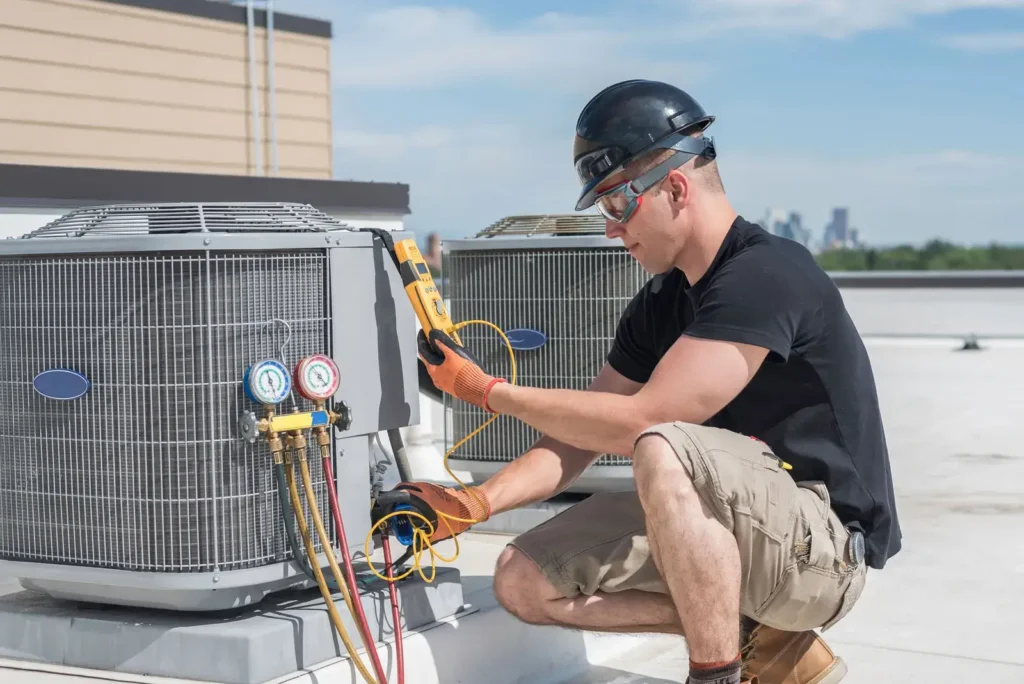
How can homeowners find a trustworthy installer in the Hills District?
This is where many projects go sideways. The system might be fine, but the workmanship is not. Or the quote is cheap because key items are missing, then the variations start.
A Sydney home services resource can help property owners compare providers, read suburb-specific guidance, and understand typical price ranges. That matters because the Hills District has everything from new builds to older brick homes, and pricing changes depending on access, roof space, switchboard condition, and duct runs.
Before booking an air conditioning system for the Hills District climate, homeowners should:
- Ask what is included in the quote, line by line
- Confirm the installer is licensed and insured
- Check reviews, then still ask for recent local examples
- Ask who handles warranty issues, the installer or the manufacturer
- Get a clear plan for placement of indoor and outdoor units
- Ask about seasonal maintenance and service schedules
A good installer will not rush these questions. They will welcome them.
What ongoing maintenance should Hills District households plan for?
Cooling performance drops quietly. Filters clog. Drains block. Outdoor coils get dirty. By the time it feels “not as cold”, the system may already be wasting power.
Seasonal maintenance advice is especially helpful in the Hills, where pollen, dust, and summer storms can all affect performance.
For an air conditioning system for the Hills District climate, a basic plan looks like:
- Clean filters every few weeks in summer (more if there are pets)
- Keep outdoor units clear of leaves and debris
- Book a professional service at intervals recommended by the manufacturer, often annually
- Check for unusual smells or gurgling sounds early, not later
Regular servicing also helps spot small refrigerant leaks and drainage issues before they become bigger repairs.
So what’s the best air conditioning system for the Hills District climate?
In most cases, the best air conditioning system for the Hills District climate is a reverse cycle inverter setup that matches the home’s layout and usage. For larger family homes, ducted reverse cycle with proper zoning is often the most comfortable and tidy option. For smaller homes or targeted comfort, high-quality split systems or a well-designed multi split can be the smarter spend.
But the “best” choice is not just the hardware. It is the design, the sizing, the installer’s workmanship, and whether the household actually uses it the way it was planned.
If they want to make a confident decision, they should compare quotes properly, use suburb-specific guidance, and vet contractors like they would any other trade. That is usually what saves money, stress, and sweaty nights later.
More to Read: Buy 2 Seater Sofas in Australia – The Perfect Choice for Modern Homes