

A simple rule helps: trim for safety first, health second, and looks last. If branches are near roofs, powerlines, driveways, or footpaths, how often should you trim trees on your property usually becomes a safety question, not a gardening one.
How often should they trim trees on their property in Australia?
Most households will book a light trim every 2–3 years and a more considered prune every 3–5 years, depending on growth. Fast growers in warm, coastal areas often need more frequent attention than slower inland species.
If the goal is to prevent storm damage and keep clearance from structures, how often should you trim trees on your property can be as often as yearly for specific trees. A local arborist can confirm a schedule based on the tree’s condition and site.
What’s the difference between trimming and pruning, and why does it change the timing?
Trimming usually means reducing small amounts of growth for shape or clearance, while pruning is more targeted removal for structure, safety, and tree health. Pruning tends to be less frequent but more deliberate.
This matters because how often should you trim trees on your property is often confused with major pruning cycles. Over-trimming can stress trees, especially natives, while well-timed pruning can reduce long-term maintenance.
How often should they trim young trees versus established trees?
Young trees often need formative pruning every 12–24 months to build strong structure. This early work can prevent weak forks, crossing branches, and future limb failure.
Established trees typically need less frequent cutting, with inspections every 1–2 years and pruning as required. In practice, how often should you trim trees on your property tends to be more frequent during the first 5–10 years of growth, then settles into longer intervals.
How often should they trim fast-growing Australian species?
Fast-growing trees can need annual checks and trims, particularly where growth quickly reaches roofs, gutters, or fences. Common fast growers include some eucalypts, wattles, and ornamental pears used in newer suburbs.
Because growth rates vary by region and rainfall, how often should you trim trees on your property should be based on what the tree did last season, not just a generic rule. If they are cutting the same spots every year, a structural prune may reduce repeat work.
How often should they trim trees near roofs, gutters, and solar panels?
Trees overhanging buildings should be checked at least yearly, ideally before storm seasons common to their area. Small trims can reduce leaf litter, branch drop risk, and shading that affects solar output.
Where branches touch roofing, scrape tiles, or block panel sunlight, how often should you trim trees on your property can become a 6–12 month cycle. The key is modest cuts done regularly rather than heavy cuts done rarely.
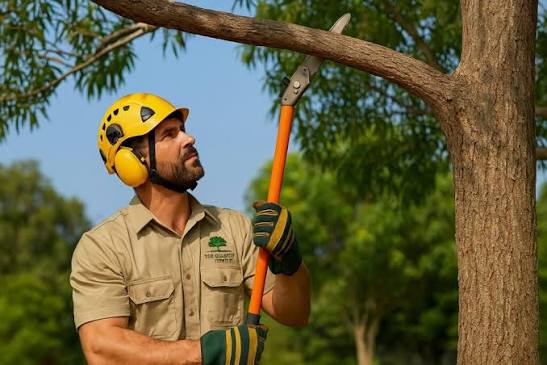
How often should they trim trees near powerlines in Australian suburbs?
If trees are close to electrical assets, they should not assume they can prune them themselves. In Australia, clearance rules vary by state and distributor, and some work must be done by authorised line-clearance crews.
For privately owned trees that are not within the network’s responsibility, they should still seek professional advice. In these situations, how often to trim trees on a property should be guided by risk, access, tree condition, and local network requirements rather than aesthetics, making professional tree maintenance advice useful.
When is the best time of year to trim trees in Australia?
For many species, late winter to early spring works well because structure is easy to see and the tree is about to enter active growth. However, timing depends on the species, local climate, and whether the aim is flowering, fruiting, or hazard reduction.
Heatwaves and extreme summer days can increase stress after pruning. If they are asking how often should you trim trees on your property, they should also ask when, because frequent cutting at the wrong time can weaken trees.
How can they tell a tree needs trimming right now?
Deadwood, hanging branches, cracking at branch unions, and limbs rubbing together are common warning signs. So are branches obstructing driveways, blocking sightlines near streets, or leaning after high winds.
If they notice sudden leaf drop, fungal growth, or lots of dead tips, a health issue may be present. In that case, how often should you trim trees on your property is less important than getting an arborist to assess whether pruning is safe or if the tree is declining.
How often should they trim fruit trees in Australian backyards?
Most backyard fruit trees do best with yearly pruning, usually after harvest or during dormancy for deciduous varieties. The aim is light penetration, airflow, and manageable height for picking.
Citrus often need less aggressive pruning, while stone fruit can benefit from a reliable annual routine. For productive gardens, how often should you trim trees on your property is often most frequent for fruit trees because consistent pruning supports fruiting and reduces pest pressure.
What happens if they trim too often or too hard?
Over-trimming can trigger weak, fast regrowth, sunburn on exposed limbs, and stress that invites pests and disease. Some Australian natives respond poorly to heavy cuts, especially if large limbs are removed repeatedly.
Frequent, harsh trimming can also create a cycle where the tree becomes more hazardous over time. If they are unsure how often should you trim trees on your property, it is safer to choose smaller, well-placed cuts and review results the following season.
How do storms and Australian weather change the trimming schedule?
After severe wind, hail, or prolonged rain, trees may drop limbs or develop cracks that were not obvious before. A post-storm inspection is often more important than sticking to a set trimming interval.
In cyclone-prone parts of Queensland or coastal storm corridors in NSW and Victoria, risk-based maintenance is common. In those areas, how often should you trim trees on your property may increase because proactive pruning can reduce wind load and branch failures.
Should they hire an arborist, and how does that affect how often they trim?
A qualified arborist can set a realistic cycle, document tree condition, and recommend staged works rather than one big cut. They can also advise on protected trees and local council rules that may apply in Australian suburbs.
With professional input, trimming often becomes less frequent and more effective because the tree develops better structure. For many owners, the best answer to how often should you trim trees on your property is “as often as an arborist’s inspection suggests,” especially for large trees.
What’s a simple trimming schedule they can follow on most Australian properties?
They can start with an annual visual check and a professional inspection every 2–3 years for medium to large trees. Then they can add targeted trims when branches approach roofs, solar panels, paths, or boundary lines.
For small ornamentals and hedging trees, trims may be yearly or twice yearly depending on growth. If they want a practical baseline for how often should you trim trees on your property, this approach keeps risk low without over-cutting.
How can they balance tree health, neighbour concerns, and council rules?
They should trim in a way that keeps the tree stable and avoids cutting that destabilises it or causes decline. If branches cross boundaries, they should communicate early with neighbours and avoid disputes by agreeing on timing and scope.
They should also check local council rules before removing major limbs or reducing large trees, as permits can apply. When they revisit how often should you trim trees on your property, it helps to treat it as part tree care, part compliance, and part neighbour management.
What’s the best takeaway for owners asking how often they should trim trees on their property?
There is no perfect universal number, but most Australian properties do well with yearly checks and pruning or trimming every 2–5 years depending on growth and risk. Trees near roofs, solar panels, powerlines, and public areas may need more frequent attention.
If they want a straightforward approach to tree trimming and pruning near me, regular inspections and early action on small problems can be more practical than waiting until severe cutting is required. The appropriate approach still depends on the tree, its condition, and the reason for pruning.
FAQs (Frequently Asked Questions)
How often should I trim trees on my Australian property for safety?
Trimming trees near roofs, powerlines, driveways, or footpaths should be done primarily for safety. This often means checking and trimming such trees at least once a year to prevent hazards like branch drop or interference with infrastructure.
What is the recommended trimming schedule for most Australian household trees?
Most households benefit from a light trim every 2–3 years and a more detailed prune every 3–5 years, depending on the tree species and growth rate. Fast-growing trees in warmer coastal areas may require more frequent attention.
How do trimming and pruning differ, and how does that affect how often I should trim my trees?
Trimming generally involves reducing small amounts of growth for shape or clearance and can be done more frequently. Pruning is targeted removal focused on structure, safety, and health, and is less frequent but more deliberate. Over-trimming can stress trees, so understanding this difference helps determine appropriate timing.
How often should young trees be trimmed compared to established trees?
Young trees typically need formative pruning every 12–24 months during their first 5–10 years to build strong structure. Established trees require less frequent cutting, with inspections every 1–2 years and pruning as needed.
When is the best time of year to trim trees in Australia?
Late winter to early spring is generally ideal for many species because the tree’s structure is visible and it is about to enter active growth. However, timing depends on species, local climate, and goals such as flowering or hazard reduction.
What risks are associated with trimming trees too often or too heavily?
Over-trimming can cause weak, fast regrowth prone to damage, sunburn on exposed limbs, and increased vulnerability to pests and diseases. Heavy cuts repeated frequently can stress Australian native trees and potentially make them more hazardous over time.